The Power of Play for Early Childhood and Lower School

By Darcy Aksamitowski, Early Childhood and Lower School Division Head
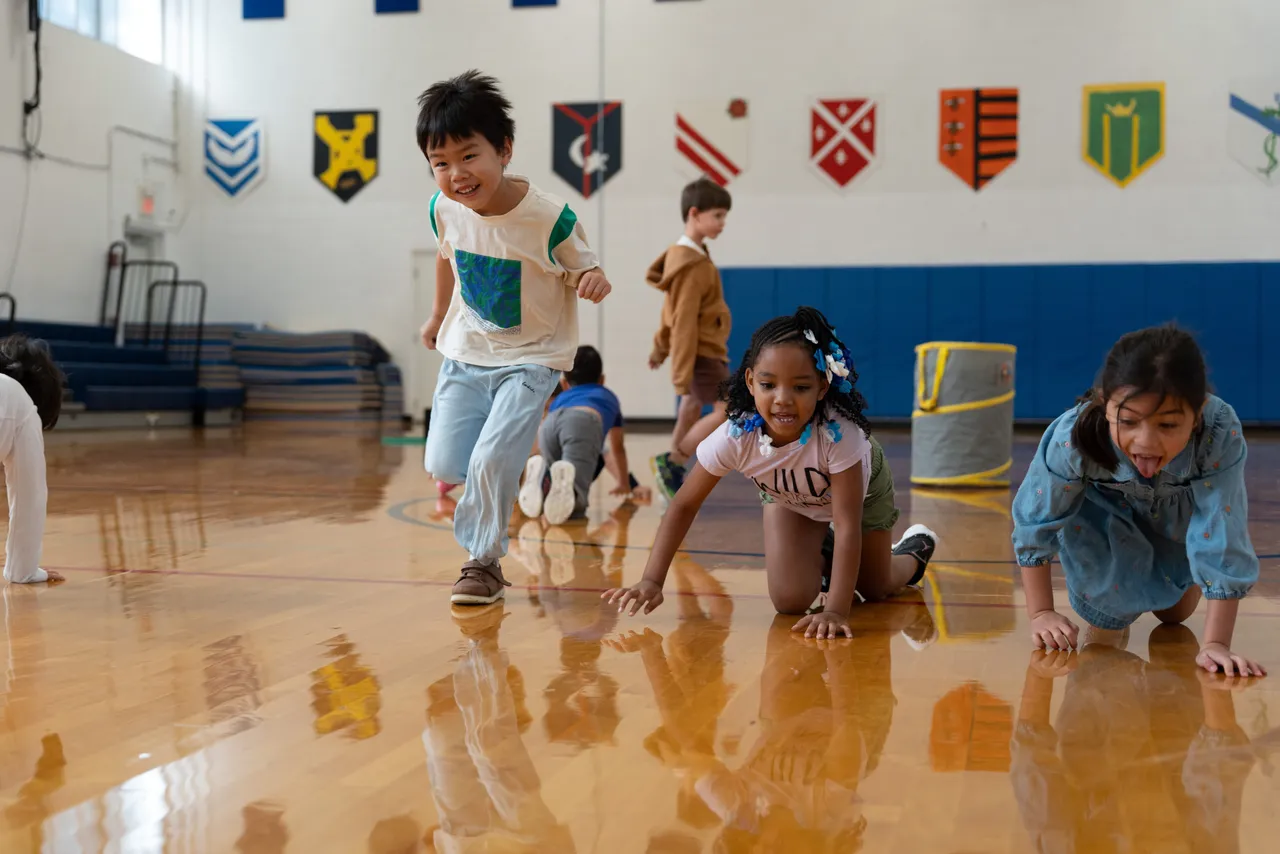
As we move through the school year, I am reminded daily of the incredible power of play, how it shapes children’s learning, strengthens their sense of self, builds essential life skills, and ultimately brings joy. In Early Childhood and Lower School, play is not an “extra.” It is a cornerstone of how children learn best. It is interwoven into everything we do, forming the foundation for success in school and in life.
When you step into our classrooms, you might see students collaborating on a block structure, puzzling through a STEM challenge, pretending to be veterinarians, experimenting with ramps and motion, or inventing new games outside during recess. These moments may appear simple, but beneath the surface, complex and meaningful learning is unfolding.
Children make sense of their world through play, and the developmental stages of childhood are strengthened by opportunities to explore, investigate, and imagine. In these moments, children develop language, reasoning, creativity, independence, emotional awareness, and, very often, genuine happiness. The American Academy of Pediatrics describes play as “vital for healthy brain development,” and we see this truth in our classrooms every day. A 2023 study published in the internationally peer-reviewed Journal of Pediatrics also found strong evidence that unstructured play, activities not directed by adults and without predetermined outcomes, helps counter rising childhood mental health concerns such as anxiety and depression.
During unstructured play, children learn to collaborate, negotiate, take turns, and solve problems. They take healthy risks, build resilience, and practice flexibility when things don’t go as planned. These experiences strengthen academic learning and the social-emotional skills needed to navigate both school and the wider world.
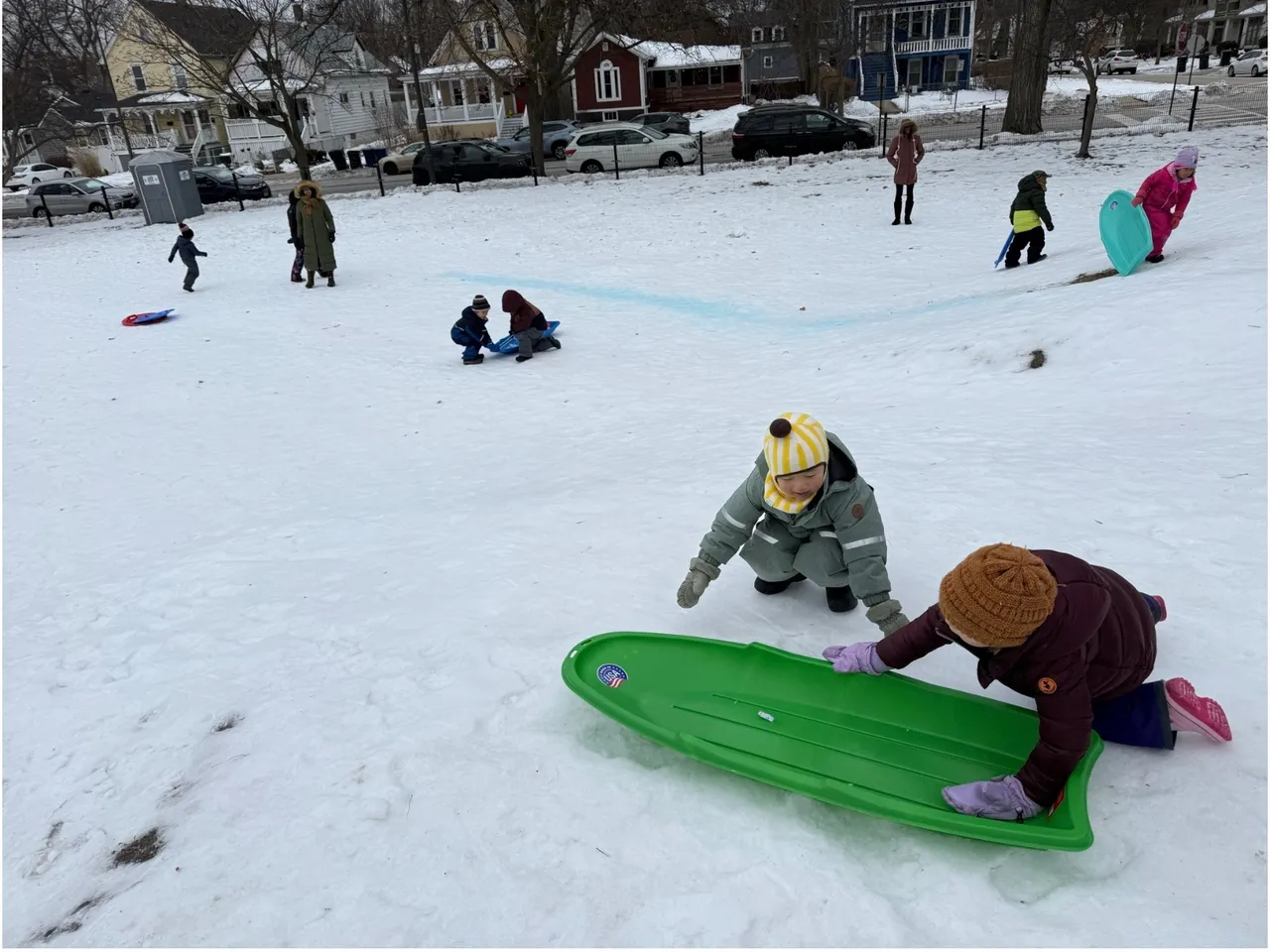
A beautiful example of this comes from PK, shared by Roycemore School teacher, Wendy Minor, who observed profound learning during one of our first snowy days this year.
She writes:
The weather has been a major protagonist in the Turtle Room these days! We went sledding every day last week. We began with a small hill and worked our way up to the larger hill at Penny Park with a medium hill in between at Alexander Park. This undirected play has been hugely successful. Initially there is some negotiation among children and educators, with teachers helping them to see possible systems of movement, for example, going up to the top of the hill (negotiating other students), then flying down! Doing it again and possibly finding a friend to go down with.
On the first day I found myself and heard other educators encouraging children to move their bodies out of the way once down, to go this way or that. But as time went on I challenged myself to say less and less. We educators had already gone through the drill of, without saying the safe word, how to sled safely among so many friends. Now the children had to practice it and come up with some of the strategies that worked for them. An educator I follow who writes a blog would often refer to these moments as “looking like chaos” to the adult eye. Child culture can look like that. I had to trust the children. I challenged myself to be, of course present but quiet and observant to watch what would unfold in this moment.
The children rose to the occasion. Their understanding of their body on the sled grew and grew. I observed their learning curve grow very quickly about how to slow a sled down and stop it. How they could position their bodies on the sled in ways to make it go fast or slower. How to connect with a friend to go down together (first with some teacher help) but then continue in an expert sledding fashion!
Children involved in this type of play are able to negotiate with friends, help each other and determine outcomes together. They face and conquer fears all the while building self-esteem through facing obstacles. Nature offers that to them. And their involvement with nature connects them to it and the land. I hope this connection will make them want to be good stewards of our land and build a pro-environmental thinker within. This week they had WINGS!
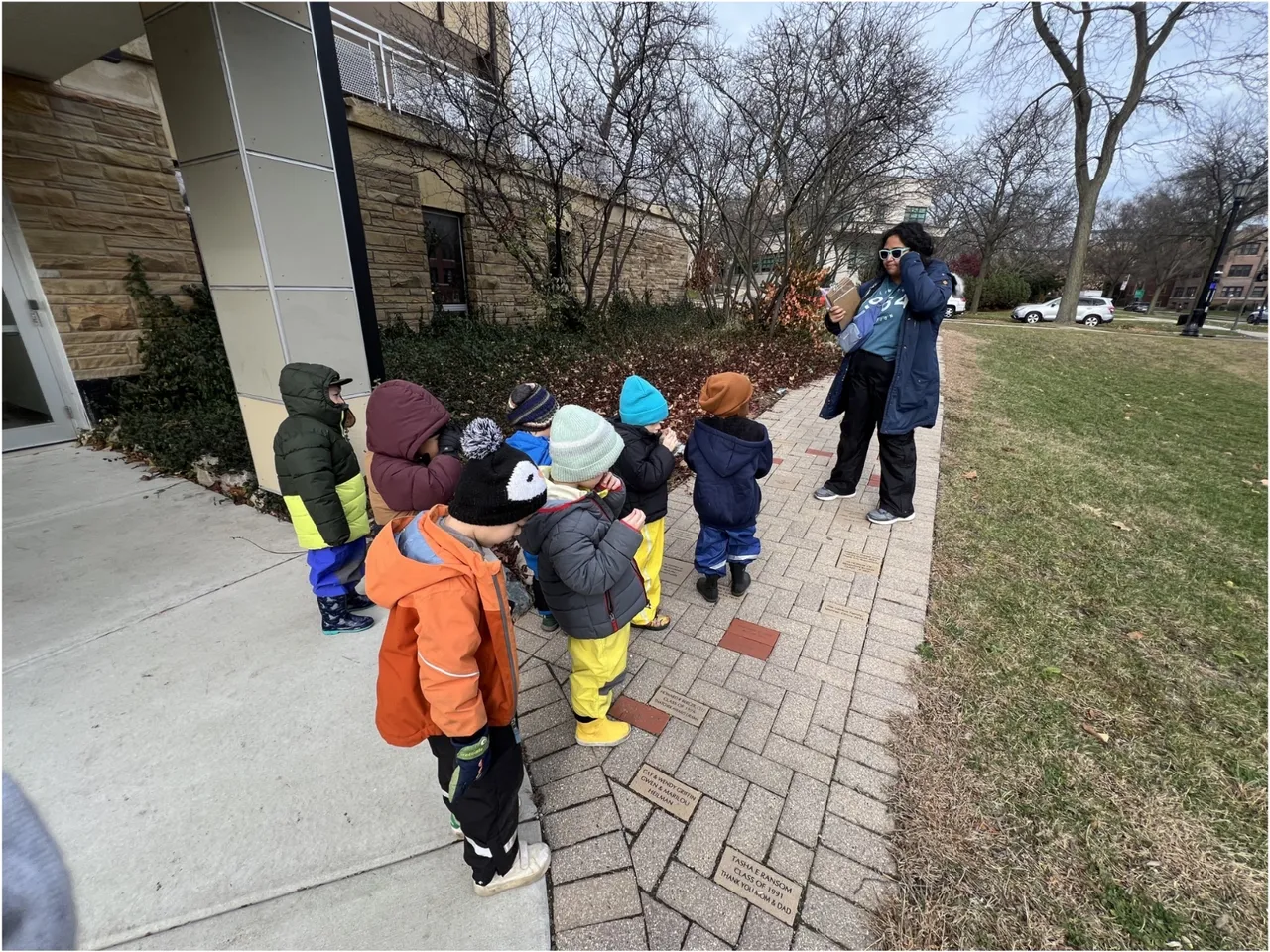
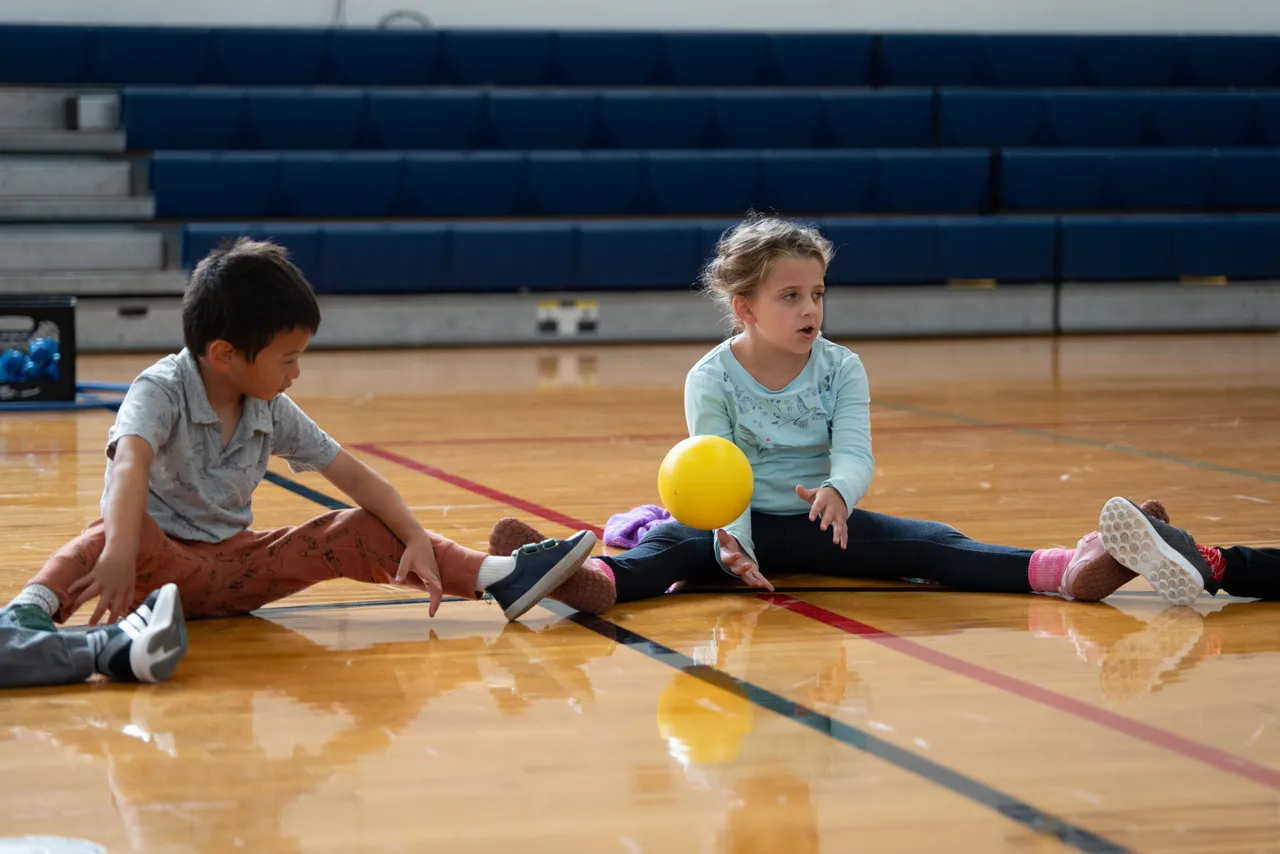
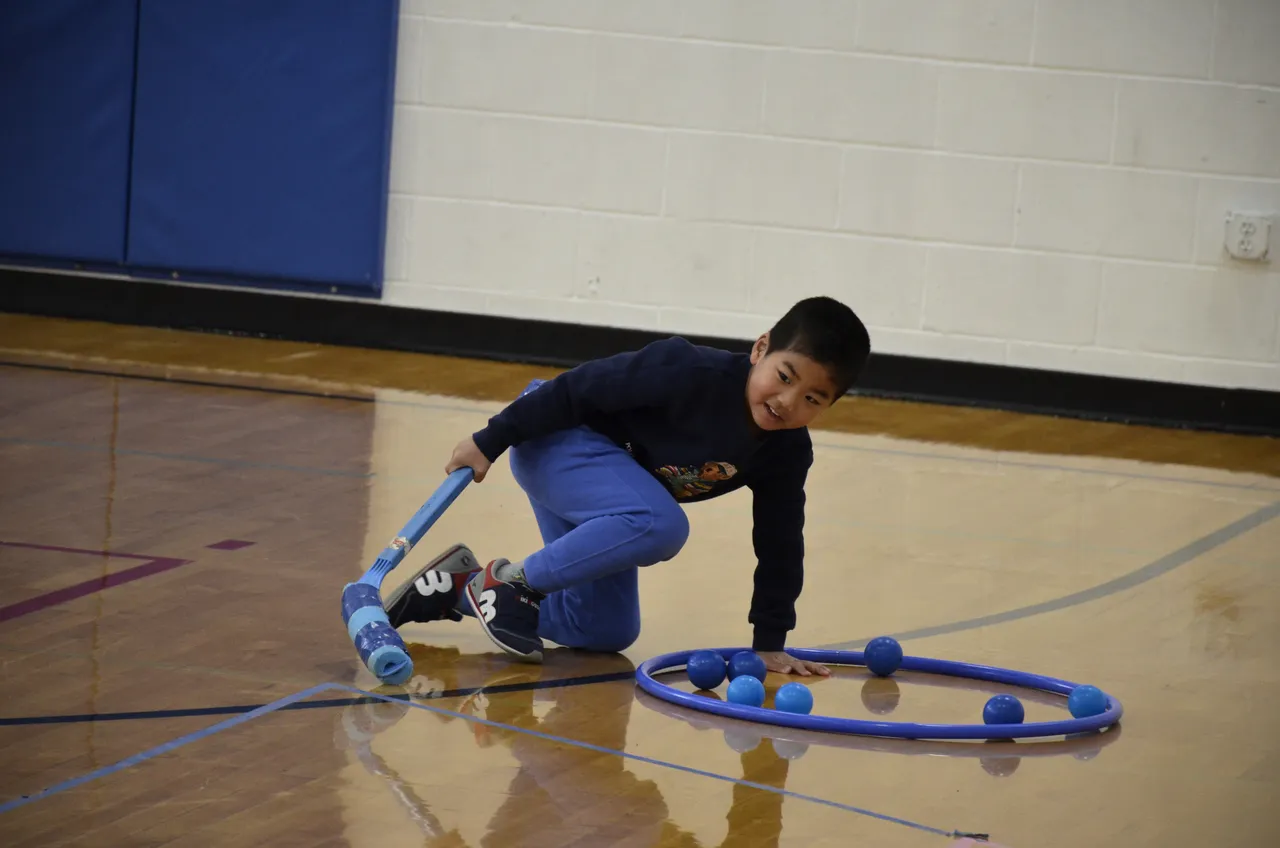
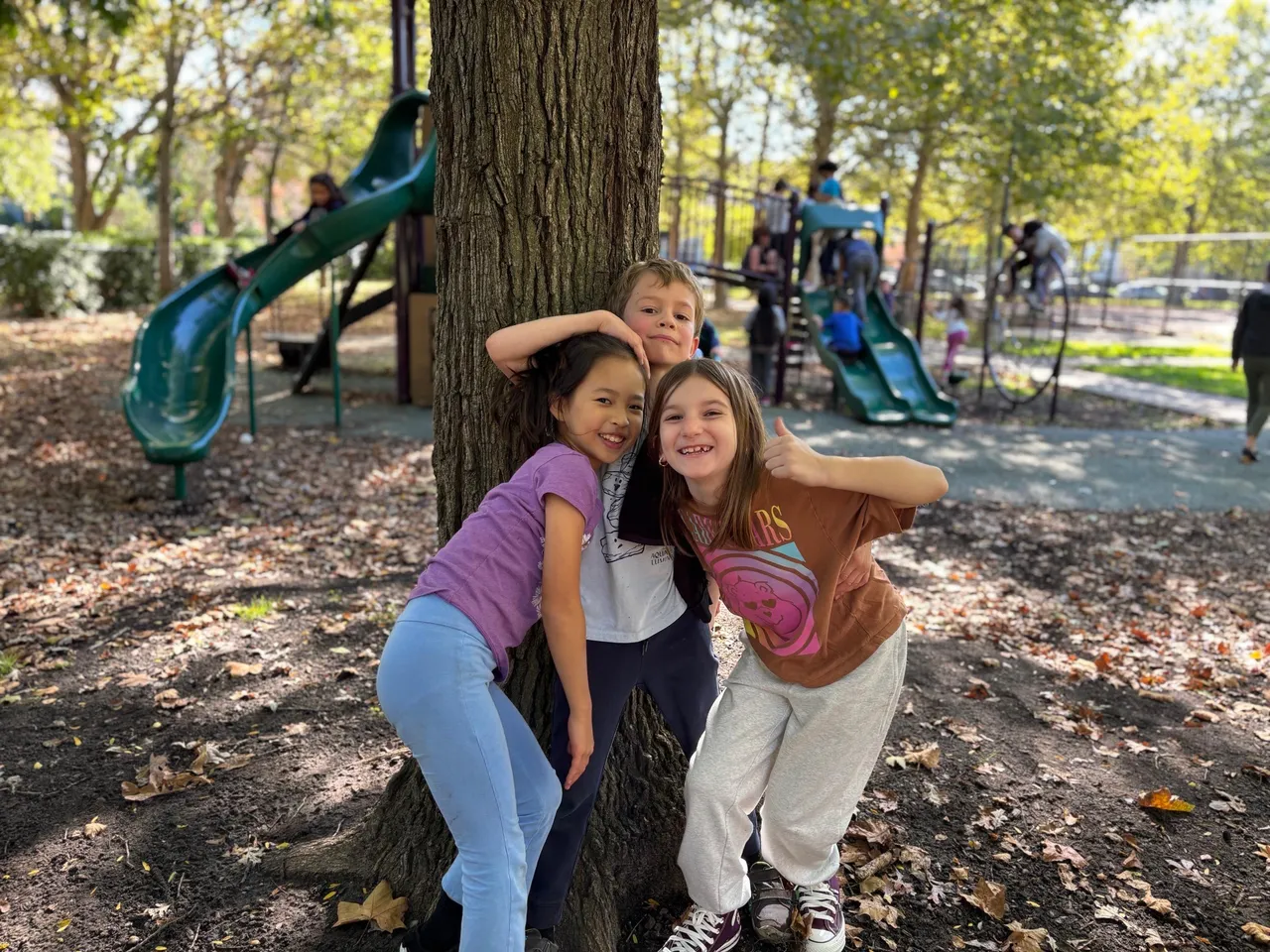
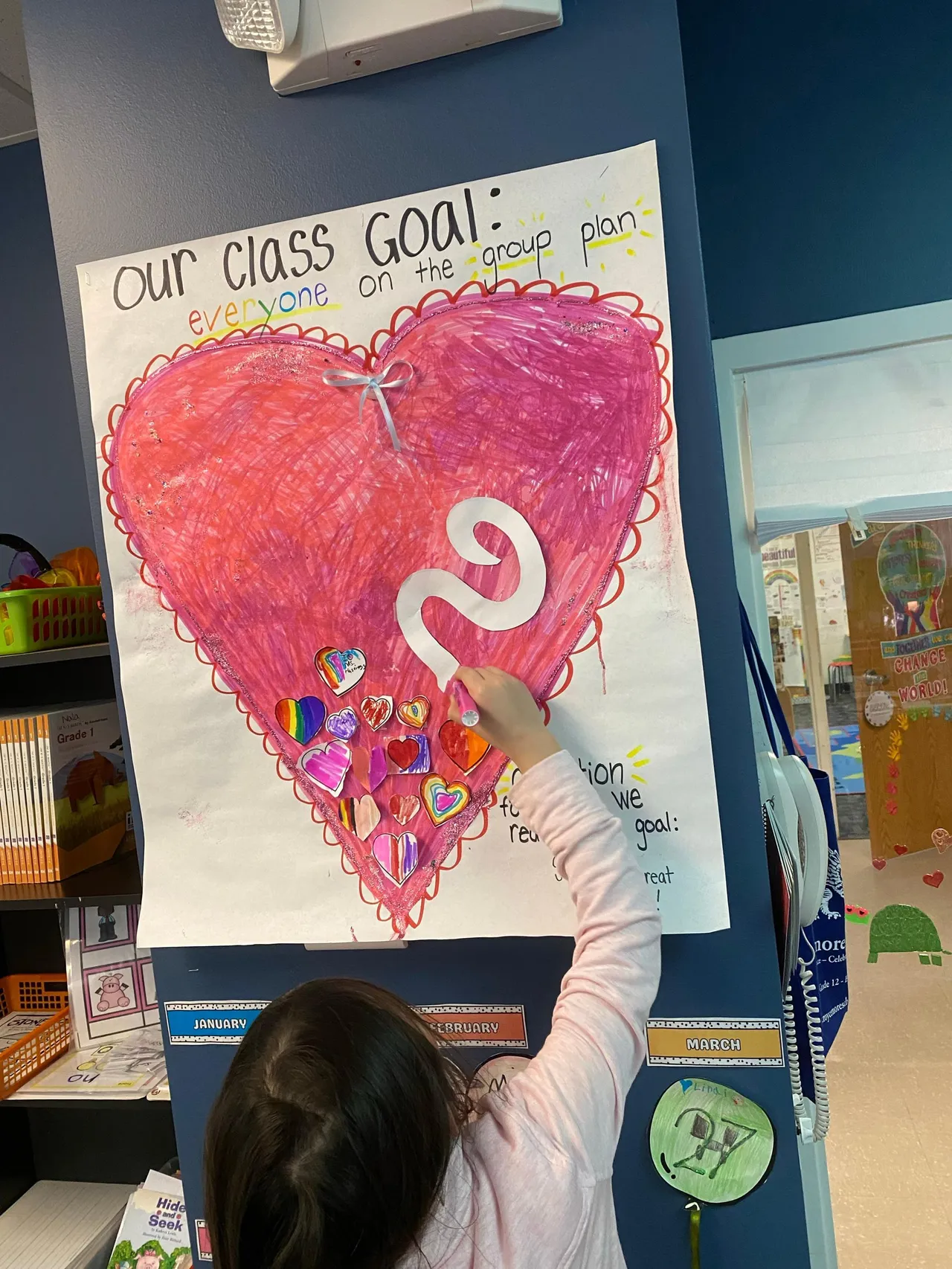
One of my favorite parts of each day is spending time outside during recess, as Ms. Wendy does with her students. I’ve watched children create nature economies, build bug circuses, choreograph dances, and brainstorm activism projects to “Save the Earth.” I’ve witnessed turn-taking, cheering one another on, and negotiating rules without adult direction. Laughter echoes across the playground daily, and the joy is contagious. Yet behind the joy, students are practicing leadership, cooperation, and shared responsibility.
This kind of play is becoming increasingly rare. Michael Patte, Ph.D., notes that opportunities for unstructured play have been declining due to safety concerns, increased academic pressures, over-scheduling, and a rise in structured activities. Yet we know that these open-ended, child-led experiences are essential for healthy development. (https://thegeniusofplay.org, n.d)
At Roycemore, we are committed to preserving and uplifting the role of play. Recess, choice time, maker activities, and project-based learning are intentionally designed to create space for children to explore, create, and follow their interests. Even during academic lessons, we encourage a playful mindset, inviting students to take intellectual risks, ask big questions, and try new strategies. In Early Childhood, you’ll find dramatic play centers buzzing with imagination, sensory tables that spark inquiry, and outdoor adventures that strengthen curiosity and connection to nature. Our PK “Adventure Days”, which occur once a week for a few hours outside the building in the morning, invite students to explore the community (neighborhoods, parks, and city), letting curiosity and wonder guide their learning. In Lower School, play evolves into design challenges, collaborative projects, creative expression, and opportunities to “play with ideas” across disciplines. The mindset is clear: play is not about right or wrong, it is about curiosity, iteration, flexibility, and perseverance.
Play beautifully supports the development of the qualities we seek to nurture in every Griffin, aligning deeply with our Portrait of a Griffin. Through play, children become:
- Curious learners who make discoveries and ask questions.
- Creative thinkers who imagine new possibilities.
- Collaborators who communicate, compromise, and problem-solve.
- Resilient individuals who persist through challenges.
- Compassionate community members who honor diverse perspectives.
It is a powerful reminder that when children are given time and space to play freely, they rise to the occasion with creativity, confidence, and kindness.