Managing Stress in the School Environment

By Brandon Zall, Upper and Middle School Division Head
One time when I was a freshman in college, I cried because I felt overwhelmed. It was not the kind of tears one produces while watching Up or The Notebook, but the main takeaway was that my schoolwork suddenly felt too big. The crux of the issue was a five-page English analysis due the same day my dad was visiting to watch our favorite basketball team play. After the game, and after eating a brat and an ice cream cone with my dad (I attended University of Wisconsin–Madison), I trudged back to the library to finish and submit the assignment by 11:59 p.m. At some point, I figured out what was needed and completed the paper.
Until I sat down to write this blog post about stress at school, I had not thought much about that moment, which at the time felt like a major inflection point in my life. Upon reflection, it was a stressful opportunity that created growth which served me well for the remainder of my college career and life. In schools, we sometimes blur the lines between stress and overwhelm. Stress is watching your favorite team play and feeling your heart race and your palms sweat. Overwhelm is walking to the car crying and not being able to drive. The correct amount of stress can make for better experiences and stronger individuals in the long run.
In her presentation for the NAIS Family Series, Dr. Lisa Damour discussed how stress at school does not always deserve its bad reputation. When students learn to appreciate the stress they face, their bodies adapt to perform better under pressure. Many of the challenges of school create an environment that helps turn students from grounded caterpillars into soaring butterflies. My experience is a testament to that, and I know I’m not alone.
This does not mean schools should create unsafe or overly difficult environments. Quite the opposite.
Schools should be places where mistakes are expected and valued as part of the learning process.
A great example of this in practice happens here at Roycemore, where a teacher created a “Mistake Garden” to celebrate both student and teacher missteps. The approach normalizes imperfection and strengthens emotional safety in the classroom.
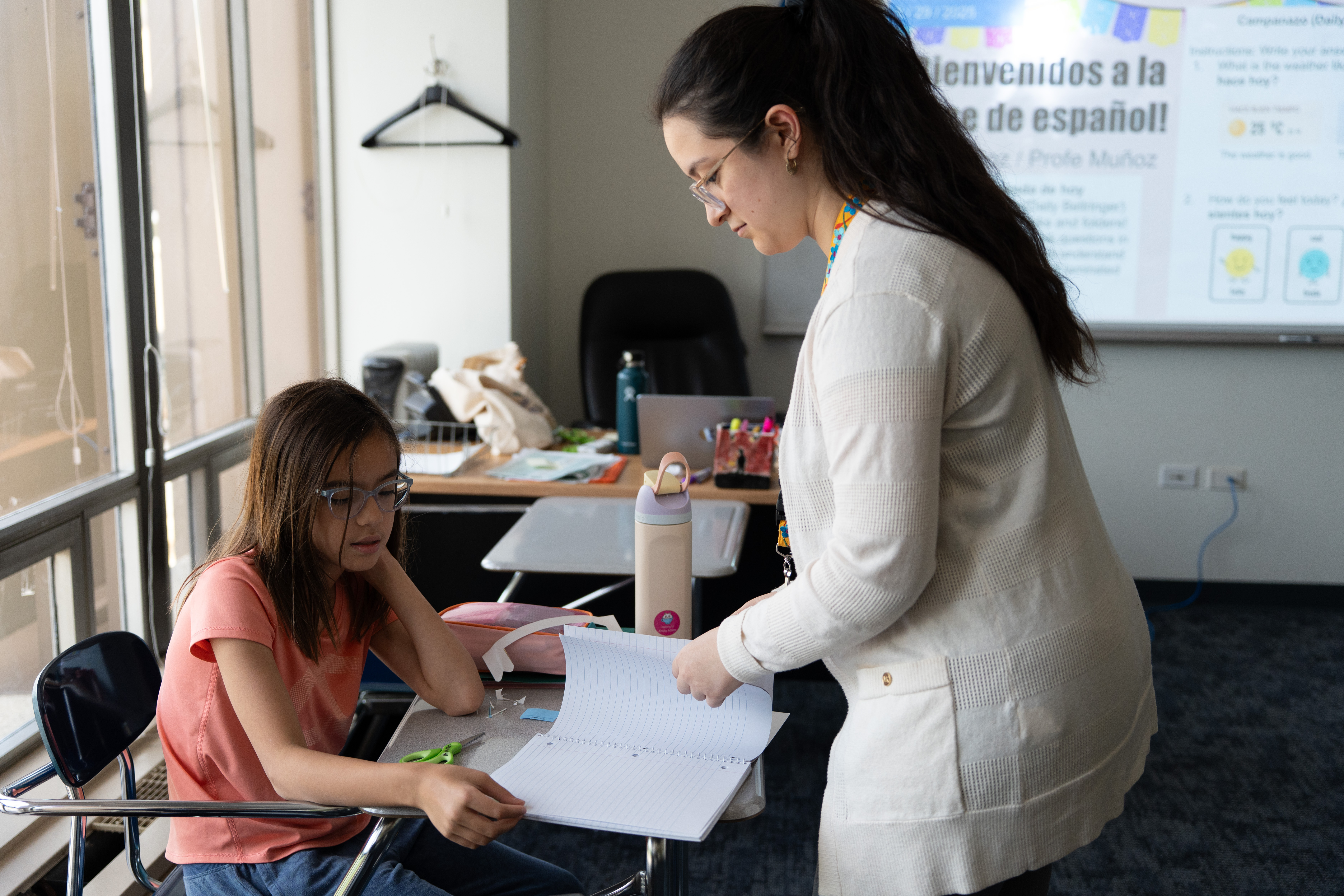
In practice, working through mistakes can feel messy, but that does not mean it is ineffective. Consider an Upper School student who is working through the stress of missing homework and assignments in multiple classes. Assignments stack up, anxiety builds, and the Advisor suggestion to “just use a planner” feels like one more demand. Simply mandating a system rarely produces ownership, and giving a strategy without support will lead nowhere. A more durable approach is to guide the student through experimentation. They might try digital tools, be assigned a supervised study hall, or work on an organization system. If one of those systems works, excellent. If not, adults remain present as guardrails, helping the student assess what failed, refine the process, and try again. Over time, the student is not just completing homework, they are learning how to manage uncertainty.
A similar dynamic plays out socially, particularly in Middle School. Tension among peers is both common and developmentally appropriate. A student may come home upset about a disagreement over Gaga rules, a comment in class, or feeling excluded at lunch. These moments are uncomfortable, but they are also formative. Learning how to interpret intent, advocate for oneself, repair relationships, and move forward are essential life skills. When adults immediately label every conflict as bullying or rush to orchestrate a formal sit-down, they can unintentionally short-circuit that growth and self-awareness. At the same time, adult awareness remains critical. Educators and families should monitor patterns, watch for power imbalances, and step in decisively if behavior crosses into sustained harm or intimidation.
While this process can feel slow, it is how students develop resilience in their academic/social lives.
The long-term aim is not to eliminate stress altogether, but to help students build the skills and confidence to navigate it.
At Roycemore, we want to explicitly teach working through stress just as much as we care about students memorizing the 50 State Capitals or dividing fractions. To quote Brené Brown, “I think we wanted to make sure that our kids did not have all our experiences, the traumatic hard ones. And somewhere along the way, we confused trauma with adversity. And adversity is really good for kids.”
We all want our students to develop psychological resilience, but students and everyone do not develop this resilience by feeling good all the time. It develops when they get better at dealing with safe stress. When I saw my dad on that cold November day years ago, I did not have the skills to deal with the stress and accomplish what I could. Yet.