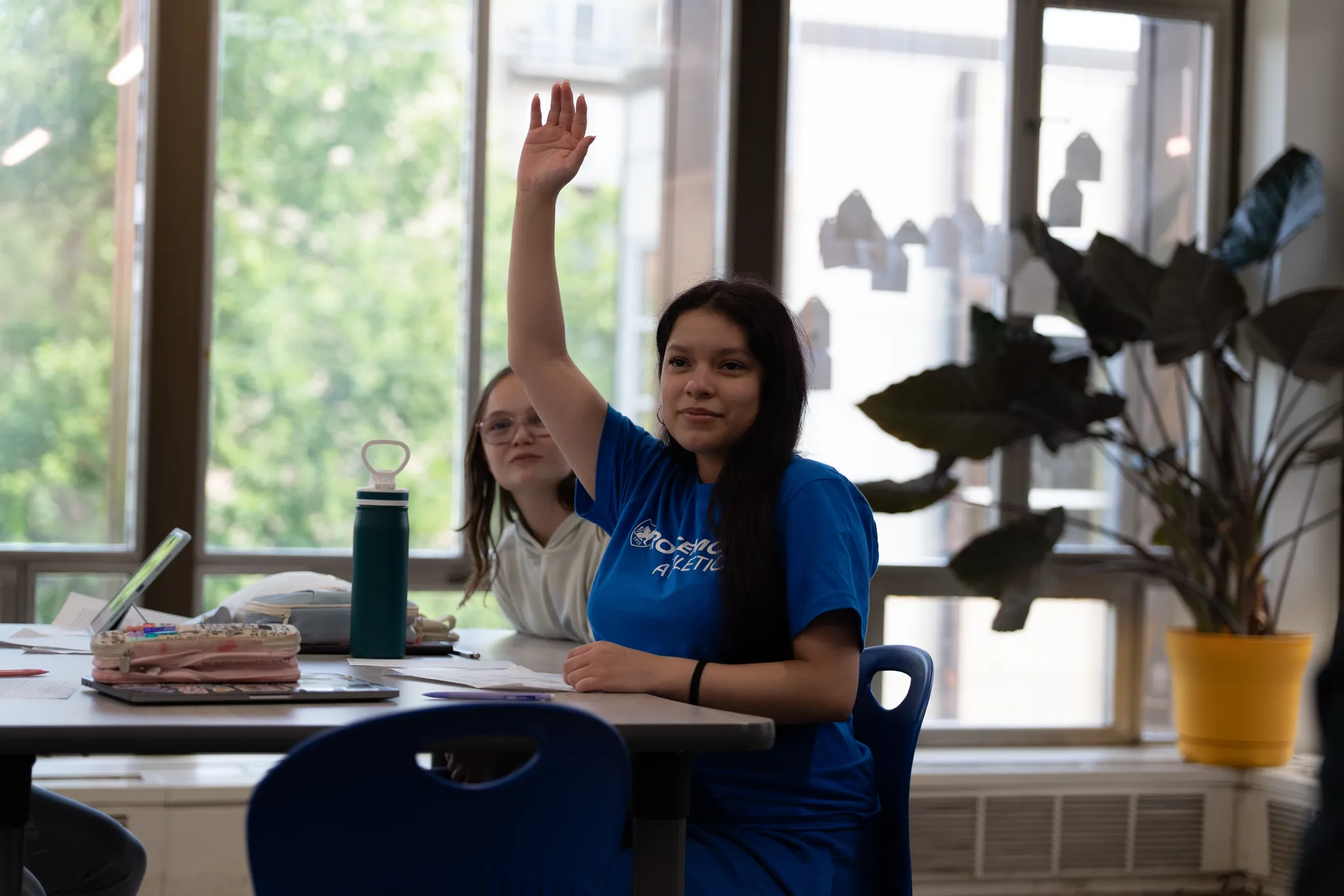
DEI Curriculum and Student Engagement
A thoughtful curriculum embraces diversity and multiculturalism. Students learn diverse perspectives across the curriculum, whether in history, literature, art, music, health, science, or math. Interdisciplinary approaches are often part of the methodology.
Early Childhood
At Roycemore, our commitment to Diversity, Equity, Inclusion, and Belonging begins with our youngest learners. From the start, we are intentional in helping children understand, value, and develop language to describe their own racial identity while noticing and respecting the identities of others.
Key understandings that guide this work include:
- Honoring all skin tones, affirming racial differences, and actively affirming Black and Brown identities.
- Exploring and celebrating diversity in race, ethnicity, culture, and language.
- Recognizing that each child and family’s racial and cultural story is unique and important to our community.
Children begin learning the language to name their own identities and to notice the identities of their peers. Students begin to affirm how their friends identify themselves, show curiosity about differences, and develop an early awareness that people have historically, and continue to be, treated differently based on race and ethnicity. A social justice lens is introduced through books, provocations, community explorations, and collaborative projects.
This work is grounded in partnership with families, honoring the wealth of experiences and stories they bring. These shared narratives build our classroom’s “funds of knowledge” and enrich our community as a whole. Both short-term and long-term projects encourage exploration of identity, culture, differences, and similarities, all within a safe and joyful classroom environment.
Our classrooms are full of mirrors and windows: books and images where children see themselves reflected and their peers represented in characters and protagonists, and also discover the beauty of people from many different cultures. Together, we nurture a safe and inclusive community where every child feels seen, valued, and celebrated.
Lower School
In the Lower School, students continue building on the foundation of belonging, equity, and curiosity that begins in Early Childhood. Lessons, stories, and experiences help them recognize the power of their voices and actions, and inspire them to see themselves as leaders and changemakers in their community and beyond.
Key ideas that guide this work include:
- Learning from diverse leaders such as Nelson Mandela, Malala Yousafzai, César Chávez, Dolores Huerta, Harvey Milk, Mahatma Gandhi, and others whose courage and activism shaped the world.
- Developing an understanding of a growth mindset and the uniqueness of every learner, including different strengths, learning styles, interests, and perspectives.
- Exploring the responsibility of being an upstander rather than a bystander through age-appropriate study of history and social justice.
- Recognizing how the arts, music, language, and athletics reflect and celebrate many cultures, voices, and ways of being.
Learning often happens both inside and outside the classroom. For example, a field trip to the Illinois Holocaust Museum invites students to reflect on the importance of standing up for others. Through art, students engage with cultural traditions from around the globe, such as Native American totems, Aboriginal dot paintings, Kente cloth weaving from Ghana, Huichol beadwork from Mexico, rangolis from India, and Japanese fish printing, while also studying influential artists like Alma Thomas, Bisa Butler, Nick Cave, and Henri Matisse, whose story of perseverance shows how creativity transcends challenge.
Music classes connect students to the history and resilience found in African American spirituals, while physical education helps them practice interdependence, teamwork, and respect. World language classes open windows to new cultures, helping students value and celebrate diversity across borders.
Through these collective experiences, Lower School students grow as thoughtful, curious, and compassionate learners who recognize their responsibility to themselves, to one another, and to the wider world.
Middle School
In the Middle School, students expand their understanding of diverse perspectives across the curriculum. Coursework and conversations encourage students to think critically, appreciate multiple viewpoints, and see themselves as active participants in a complex, interconnected world.
Key ideas that guide this work include:
- Exploring literature that honors the authenticity of diverse authors and protagonists, with a focus on celebrating untold stories and rich literary achievements rather than centering solely on narratives of oppression.
- Utilizing our diverse city of Chicago to explore cultures, cuisine, art, and people from all backgrounds.
- Learning from artists such as Frida Kahlo, Faith Ringgold, Jean-Michel Basquiat, and Jacob Lawrence, whose creative expressions inspire students to explore identity, emotion, and social commentary through their own artwork.
- Investigating how music, particularly jazz, blues, Motown, and national anthems, reflects cultural identity, social change, and the historical forces that shape communities across the globe.
- Building community and interdependence through wellness and physical education, where teamwork, respect, and empathy are central to both sport and self-development.
- Examining social justice through the lens of athletics, discussing how athletes past and present have navigated race, gender, socioeconomic status, and the intersectionality of identity.
In addition to the core class curriculum, students have Advisory or Homeroom each day. In these small groups, students engage in dialogues that align with our Portrait of a Griffin and help grow their mindset and habits to be advocates for themselves and others. While key concepts are introduced, the curriculum allows for flexibility to respond to student needs and world events that can help shape citizenship.
Upper School
In the Upper School, each discipline incorporates multiple perspectives and diverse representation. Coursework invites students to engage deeply with complex ideas, question assumptions, and explore how history, culture, science, and art intersect to shape the modern world.
Key ideas that guide this work include:
- Examining culturally relevant and responsive science curricula, which highlight the contributions of scientists from diverse backgrounds, address environmental injustices disproportionately affecting Black and Brown communities, and invite discussion of bioethical dilemmas.
- Investigating U.S. History with a focus on Native American cultures and the consequences of European colonization, the evolution of women’s rights and roles, and the African American experience. This covers everything from enslavement to citizenship, reconstruction to civil rights, and beyond.
- Analyzing the systemic effects of racism in AP U.S. History, including segregation, inequality, and the pursuit of justice after the Civil War. Students study key abolitionists and reformers whose work continues to shape civic life and racial equity today.
- Understanding global perspectives in World History, where race, identity, territorial dispossession, minority relations, and the role of women are central themes.
- Exploring LGBTQ+ history from the Stonewall Riots to the establishment of Pride celebrations, the founding of Gender and Sexuality Alliances, and the first Day of Silence commemorations.
- Discussing landmark Supreme Court cases such as Hollingsworth v. Perry and Obergefell v. Hodges, and their connections to earlier civil rights decisions, including Brown v. Board of Education and Loving v. Virginia.
- Considering issues of discrimination, stereotyping, and gender bias in AP Psychology through a social and cognitive lens.
- Experiencing art and music curricula that encourage students to recognize how creative expression reflects identity, resilience, and global interconnection.
In addition to their academic courses, students participate in Advisory or Homeroom each day. These small-group settings allow for reflection, dialogue, and connection, aligning with our Portrait of a Griffin and helping students develop the mindset and habits to advocate for themselves and others. While key themes are introduced, the curriculum remains flexible, responsive to student needs, current events, and the evolving conversations that shape active, informed citizenship.